Occupational Health and Safety

Supporting the SDGs Goals
Stakeholders Directly Impacted

Goals and Performance Highlights




Commitment, Challenge and Opportunity
Occupational health, safety, and a good working environment are critically important in business operations, especially for businesses that operate in factory areas, which may pose risks of illness and accidents, leading to bodily harm and loss of life for employees and potentially resulting in damage to the organization’s property. Having a good occupational health and safety system can build trust among the organization’s employees, allowing them to work in various areas with confidence and preventing unforeseen incidents that may arise. If any organization neglects the management of occupational health and safety, it may lead to accidents or employee illnesses, causing work stoppages, loss of reputation and trust in the organization, and possible violations of labor protection laws, which could result in fines, temporary suspension of operations, or the revocation of business licenses.
Management and Operational Approach
The group has established a corporate social responsibility policy that covers responsible and fair operations. One of the key issues the group places great importance on is the treatment of employees, including their safety during work activities across the group’s operations.
This policy outlines the commitment to ensuring employees work in a safe environment, maintain good occupational hygiene, and comply with legal requirements, as well as the needs and expectations of stakeholders. It also aims to enhance the awareness of human resources and their potential to align with operational needs. Measures have been put in place to mitigate work-related risks for employees and all visitors. Employees are trained to work safely and efficiently. Additionally, there is a Safety, Occupational Health, and Environment Committee (SHE) elected by employees within the group. The group has managers overseeing safety, occupational health, and the work environment, as well as professional-level safety officers, supervisors, and management-level staff. The group also supports the implementation of the Occupational Health and Safety Management System (ISO 45001). All of this ensures that the relevant departments and responsible individuals strictly oversee occupational health and safety operations in the workplace. This demonstrates the group’s commitment to making the organization a safe place, free from risks and undesirable incidents, in order to achieve the goal of “zero work stoppage accidents.”
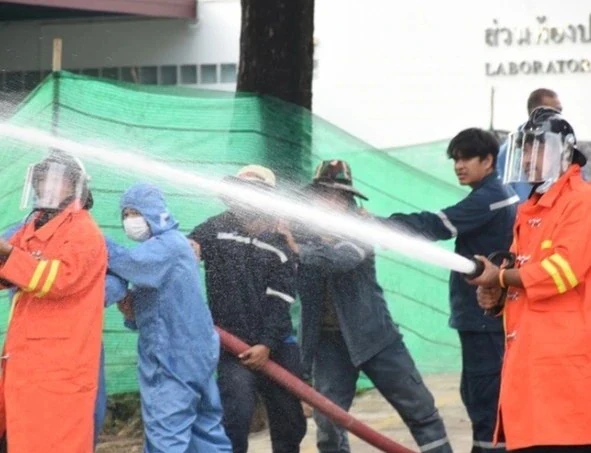
To control safety in operations, the group has developed an annual safety, occupational health, and work environment plan, which includes various aspects such as training as required by law and enhancing safety capabilities for employees at all levels. It covers safety measures, improvements to fire prevention systems and emergency response systems, health and hygiene, safety promotion campaigns, inspection of safety equipment, and the reporting of activities as required by law. Additionally, the group carries out safety operations according to the Occupational Health and Safety Management System (ISO 45001), which includes a process for identifying hazards that need to be considered
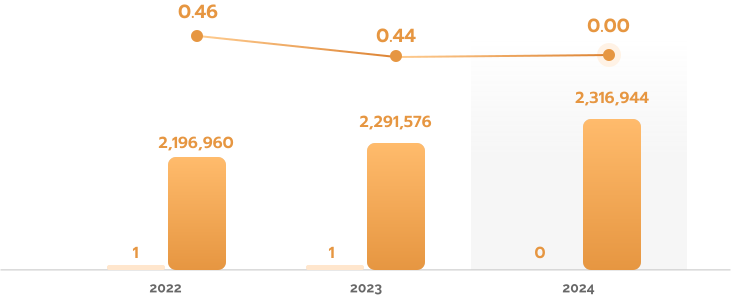
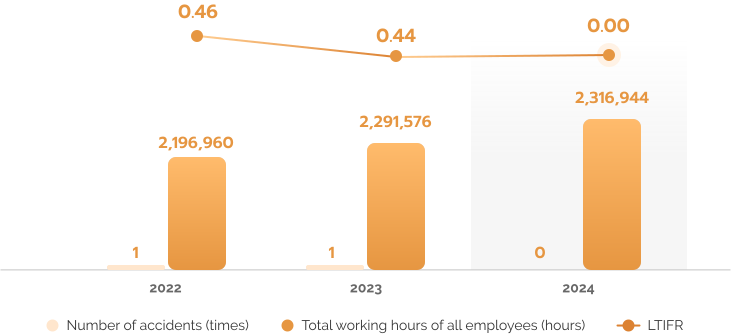
As a result of these activities, the LTIFR for 2025 was 0.41, with no work-related fatalities.

| Year | Number of accidents (times) | Total working hours of all employees (hours) | LTIFR |
|---|---|---|---|
| 2023 | 1 | 2,291,576 | 0.44 |
| 2024 | 0 | 2,316,944 | 0.00 |
| 2025 | 1 | 2,440,229 | 0.41 |
The Company maintains comprehensive safety measures that extend to contractors operating within the Company premises. This includes training and clarification of regulations, and implementing controls to ensure safety and legal compliance. The Company also welcomes interested parties to visit and study its safety practices. In 2025, four contractors worked within the Company for a total of 314,688 hours, with zero reportable incidents resulting in lost workdays – an LTIFR of 0. Furthermore, there were no work-related fatalities among any of the companies.